Based on Open Standards (VDA 231-301, JSON) – Industry-Neutral, Efficient and Agile
Summary
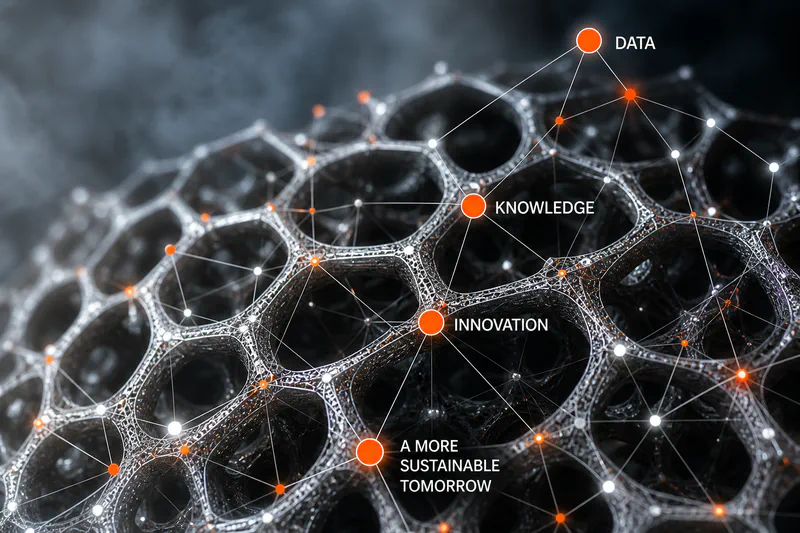
MatliX (Material Lifecycle Information eXchange) is an industry-neutral solution for secure, efficient and standardized exchange of material-related information along the entire value chain.
MatliX services are based on the VDA 231-301, an official VDA recommendation for the machine-readable exchange of material and test data. It is developed and maintained in the VDA project group “Digitales Werkstoff-Datenmanagement im Bemusterungsprozess” with scientific support from the Institute for Engineering Design and Industrial Design (IKTD) at the University of Stuttgart. The schemas are open (JSON Schema, MIT license) and freely available on GitHub. The modular structure enables flexible extension with sub-schemas for new use cases.
VDA 231-301 builds on VDA 231-300, which defines how materials and surfaces are described (including the reference to 3D product data in JT / ISO 14306). VDA 231-301 defines how test and measurement results are structured and exchanged. MatliX is a Matplus offering built on these standards; it is not part of the standard itself.
With MatliX, material certificates, substance declarations, sampling processes as well as PCF and DPP data can be exchanged in a standardized, machine-readable and lightweight manner – from point-to-point connections between ERP, PLM and other systems to optional connection to industrial data spaces such as Catena-X.
Information Exchange in Complex Value Chains
Current Challenges
- Inconsistent Data Formats: Each actor uses their own standards or proprietary solutions.
- Manual Processes: Material certificates, substance declarations or sampling data are often exchanged via email or PDF – error-prone and inefficient, usually limited to simple characteristic values.
- Repeated Data Entry: Test planning, result consolidation and reporting are often handled manually, with the same data entered several times across systems. This leads to ambiguous interpretations, transcription errors and costly rework.
- Regulatory Requirements: The EU Ecodesign for Sustainable Products Regulation (ESPR) introduces the Digital Product Passport (DPP) step by step via product-specific delegated acts; according to the Commission’s working plan, iron and steel as well as aluminium are among the first priorities. At the same time, companies are increasingly expected to provide Product Carbon Footprint (PCF) data and substance declarations (e.g., according to REACH).
- Data Spaces & Interoperability: Initiatives such as Catena-X or Manufacturing-X rely on standardized data models – but many companies shy away from the overhead of new technologies such as the Asset Administration Shell (AAS).
Solution Approaches on the Market
| Approach | Advantages | Disadvantages |
|---|---|---|
| Proprietary Solutions | High control, individual customization | No interoperability, high costs |
| AAS (Asset Administration Shell) | Standardized, future-proof | High initial effort, overhead |
| MatliX | Pragmatic, standards-based, flexible | Lightweight, builds on existing standards |
MatliX: The Pragmatic Alternative
Core Principles
- Open Standards: Based on VDA 231-301 (machine-readable test and measurement data for sampling and approval processes) and DIN SPEC 9012 (e-CoC for aerospace).
- Modularity: Data is structured as JSON payloads – without forced shell like AAS.
- Flexible Integration: Point-to-point interfaces (project-specific, e.g. REST, SFTP) or optional connection to data spaces (e.g., Catena-X).
- Regulatory Compliance: Designed to support upcoming ESPR/DPP requirements and PCF data through structured, machine-readable data provision.
Supported Use Cases
| Use Case | Matlix Solution | Standard | Advantages |
|---|---|---|---|
| Material Certificates | Digital, machine-readable certificates (e.g., for heat treatments) | VDA 231-301 (sub-schema EN 10204 3.1), DIN SPEC 9012 | Automated verification, traceability, integrity checks (e.g. via digital signatures, if used). |
| Substance Declarations | Structured data on material compositions (e.g., for REACH) | VDA 231-301 – sub-schema “Substance Declaration” (draft, published for discussion since April 2026) | Supports structured substance data, easy integration into PLM. |
| Sampling Processes | Digital exchange of test reports and release documents | VDA 231-301 | Accelerated processes, reduction of media breaks. |
| PCF (Product Carbon Footprint) | Standardized CO₂ data per material or component | – (planned; no VDA 231-301 sub-schema yet) | Transparency for sustainability reports, easy aggregation. |
| DPP (Digital Product Passport) | DPP as JSON sub-model in Matlix (planned) – with optional AAS connection for Catena-X. | Planned; no DPP sub-schema exists yet – a new sub-schema would go through the VDA project group process | Preparation for regulatory requirements, future-proofing. |
Available Sub-Schemas
The VDA 231-301 schema catalog lists the following sub-schemas. Only sub-schemas in the central schema repository are officially released; others are drafts.
| Sub-schema | Focus | Status |
|---|---|---|
| VDA 231-300 | Material and surface definition in 3D models (JT) | Listed in the schema catalog |
| VDA 231-301 Generic | Generic core definitions and reusable model elements | Listed in the schema catalog |
| SEP 1240 | Tensile testing of steel sheets for CAE calculations | Officially released (29 April 2026) |
| EN 10204 3.1 | Digital inspection and acceptance certificates | Listed in the schema catalog |
| VDA 270 | Odor assessment (panel testing) | Listed in the schema catalog |
| VDA 275 | Formaldehyde emission test data | Listed in the schema catalog |
| VDA 278 | VOC / fogging emission test data | Listed in the schema catalog |
| Substance Declaration | Structured substance and material composition data | Draft, published for discussion (3 April 2026) |
Source: VDA 231-301 schema catalog.
Examples from Practice
- SEP 1240: The officially released SEP 1240 sub-schema enables the standardized digital exchange of CAE-relevant test results for steel sheets.
- BMW GS 93016 (third party, not a Matplus project): Brain of Materials announced support for BMW GS 93016 approval processes that explicitly uses the VDA 231-301 framework.
Technical Implementation: Pragmatic and Standards-Based
Data Model: Open Standards as Basis
MatliX uses established, cross-industry standards as payloads:
- VDA 231-301: Machine-readable test and measurement data for material sampling and approval processes. It originates from the automotive industry, but the data model is generically applicable to any industry that exchanges structured material information.
- DIN SPEC 9012: Electronic Certificate of Conformity (e-CoC) for aerospace.
- JSON Schema (draft 2020-12): Open, versioned (semantic versioning) schemas that can be validated automatically. A generic core schema is extended by domain-specific sub-schemas.
How the schemas are organised: The Generic Schema defines the shared building blocks (identifiers, metadata, objects such as TestingProject, TestingCenter and Sample). Sub-schemas extend it for a specific standard or domain. Each sub-schema starts as a public draft on GitHub and is only officially released after approval by the responsible VDA project group. Requirements can be defined at two levels: “Must” (mandatory per referenced standard) and “Can” (optional, e.g. internal factory standards).
Integration Options: Point-to-Point (Pragmatic Solution)
- Interfaces: project-specific, e.g. REST API or SFTP.
- Advantages:
- Lightweight – builds on existing standards and infrastructure.
- Quick implementation – ideal for closed ecosystems.
- Example:
- An automotive manufacturer loads material data according to VDA 231-301 directly from MatliX into its PLM/ERP system.
Integration Options: Data Spaces (Optional AAS Connection)
- For Catena-X, Manufacturing-X & Co.:
- Matlix payloads are embedded as submodels in an AAS – only if required.
- Technical Implementation:
- AAS submodel template references Matlix data.
- Advantages:
- Compatibility with AAS-based ecosystems (e.g., Catena-X).
- Future-proof – if AAS becomes mandatory for certain industries.
Matlix remains pragmatic – but is ready for the future. Data space protocols such as DCP or ODRL can be integrated if needed, without disrupting your existing processes. Matlix is oriented towards IDS-RAM (IDSA) and Gaia-X principles and is designed to be connectable to data spaces such as Catena-X. For concrete integrations (e.g., Catena-X), Eclipse EDC and DSP will serve as the technical basis.
Extensions for Data Spaces, Protocols
- OIDC (OpenID Connect): Secure authentication and authorization for access to Matlix data - Planned, e.g. with Keycloak
- DSP (Data Space Protocol): Standardized protocol for secure data transmission in data spaces. Planned, e.g. with Eclipse EDC.
- DCP (Decentralized Claims Protocol) with DSP, as required by Catena-X (CX-0018).
- ODRL (Open Digital Rights Language): Rights and license management for data (e.g., for DPP/PCF).
DPP & PCF with MatliX
- Digital Product Passport (DPP):
- Planned as JSON submodel in Matlix – without AAS overhead.
- Designed to support upcoming ESPR requirements through:
- Machine-readable data (JSON).
- Unique product ID (e.g., UUID or IEC 61406 ID link).
- Structured metadata (e.g., manufacturing date, recycling information).
- Product Carbon Footprint (PCF):
- Planned: integration into existing material data, e.g. as a planned sub-schema. No PCF sub-schema exists yet; it would need approval by the VDA project group.
Advantages of Matlix at a Glance
| Criterion | MatliX | AAS-Based Solutions | Proprietary Solutions |
|---|---|---|---|
| Effort | Low – use of existing standards. | High (submodel templates, AAS server). | High (individual development). |
| Flexibility | High – adaptable to your processes. | Limited by AAS structure. | High – but not interoperable. |
| Interoperability | Optional – AAS connection if needed. | High – but with overhead. | Low. |
| Regulatory Compliance | Supported – designed for upcoming ESPR/DPP requirements, REACH and PCF data. | Yes. | Risk of incompatibilities. |
| Cost | Lightweight – builds on existing standards. | Medium to high. | High. |
| Future-Proofing | Yes – can be extended with AAS. | Yes. | No. |
Perspectives: Integration into Industrial Data Spaces
Catena-X & Co.: AAS as Option, Not Obligation
- MatliX enables:
- Pragmatic data exchange (point-to-point) for closed ecosystems.
- Optional AAS integration for data spaces like Catena-X – without changing your existing data.
- Advantages:
- No obligation to use AAS – you decide when and whether to use AAS.
- Easy migration: If AAS becomes mandatory in the future, your Matlix payloads can be mapped to AAS submodels (planned).
- Ecosystem fit: VDA 231-300 and 231-301 complement digital ecosystems such as Catena-X by enabling data exchange without proprietary formats, manual re-entry or interpretation gaps.
MatliX as a Bridge Solution
“Matlix is the pragmatic bridge between established standards (VDA, DIN SPEC) and modern data spaces. You can start with point-to-point today – and retrofit AAS tomorrow if needed, without changing your data.”
Conclusion: Why Matlix is the Right Choice
- Pragmatism Instead of Overhead:
- Matlix uses established standards (VDA 231-301, DIN SPEC 9012) – without forced AAS shell.
- Regulatory Compliance:
- Supports upcoming ESPR (DPP) requirements, REACH (substance declarations) and PCF through structured, machine-readable data.
- Flexibility:
- Point-to-point or data spaces – you decide how to integrate.
- Future-Proofing:
- Optional AAS connection for Catena-X & Co. – without disrupting your existing processes.
- Cross-Industry:
- One generic data model with domain-specific sub-schemas – designed for multiple industries, from automotive industry to aerospace.
Who Benefits
| Role | Benefit |
|---|---|
| Manufacturers | Define the required material data once, in a form every supplier can deliver; less coordination effort; comparable, auditable data. |
| Suppliers | Submit material and test data once and reuse it for several customers; less manual re-entry. |
| Test laboratories | Structured test results that integrate directly into customer systems. |
| Compliance & quality | Consistent, formally validated data for audits and sustainability reporting. |
Next Steps for Your Company
- Explore the schemas: Browse the sub-schema repositories and pick those relevant to your domain (schema catalog).
- Validate your data: The browser validator on the standard’s website is announced but currently marked “coming soon”; until then, validate in your own pipeline against the JSON Schema.
- Pilot with MatliX: Test an exchange with a material data set according to VDA 231-301.
- Integrate DPP/PCF: Extend your payloads with metadata for upcoming ESPR/DPP requirements.
- Optional AAS Interface: Develop an adapter for Catena-X (if needed).
Contact & Further Information
Matplus GmbH
Contact: Contact form
Website: Matplus Homepage
Standard and documentation: vda231-301.github.io (documentation, schema catalog, news)
Schemas: VDA 231-301 on GitHub