A material is not a static row of properties. Its usable engineering properties depend on composition, product form, manufacturing route, heat treatment, test conditions, statistical treatment, qualification status, revision, source and intended application. At the same time, the same material has to be represented differently in procurement, CAD, CAE, PLM, ERP, compliance and sustainability processes.
Conventional materials information management (MIM) addresses an important part of this problem: collecting, governing and distributing materials information. Enterprise Materials Integration (EMI) extends the scope to the processes that create and transform that information and to the enterprise systems that consume it.
What is Enterprise Materials Integration?
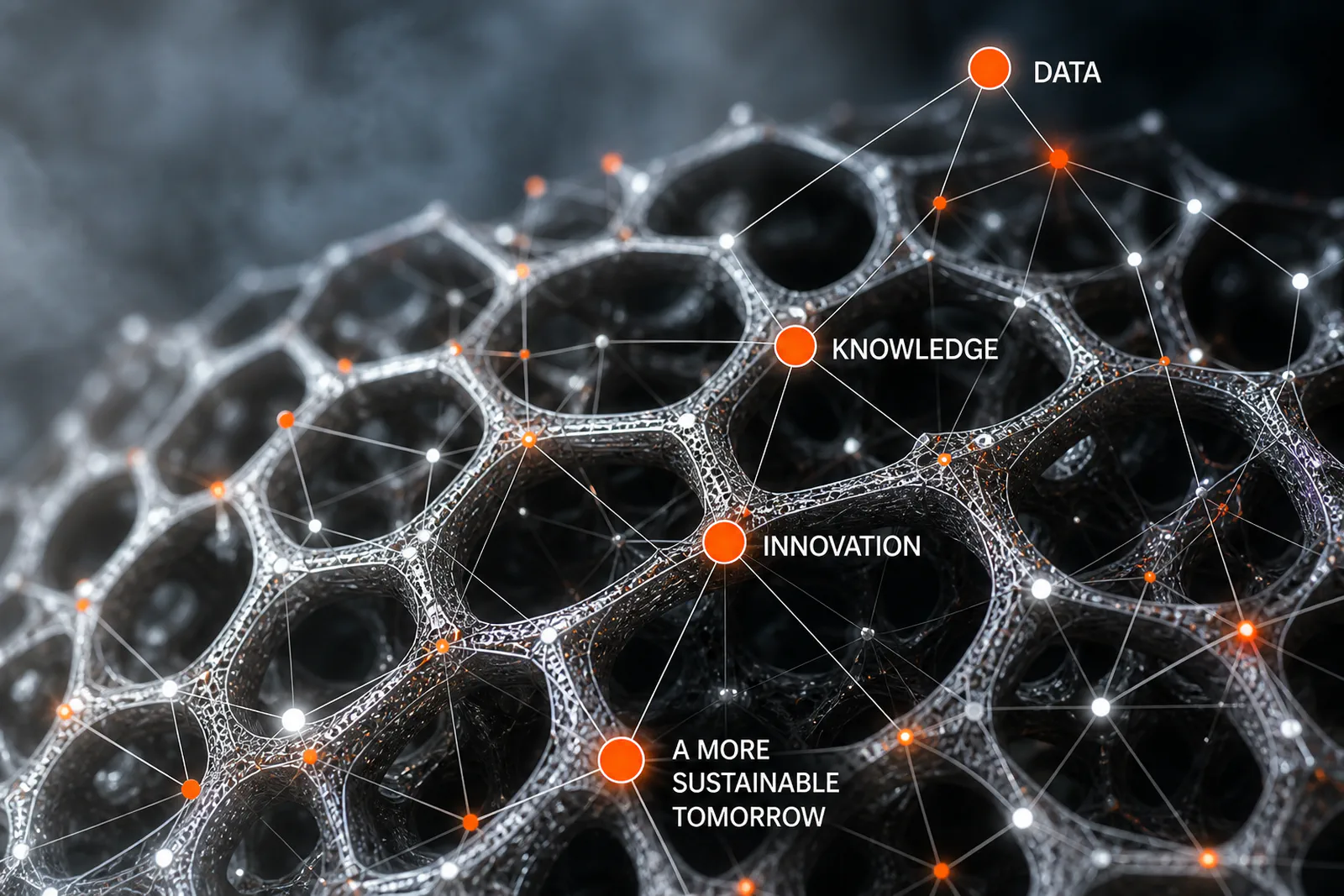
EMI is an enterprise engineering architecture that maintains materials as evolving, context-dependent knowledge. It keeps the relationships between material identity, composition, process history, material state and microstructure, experimental and simulation evidence, derived properties, models, qualification and application intact.
EMI is not a replacement for PLM, ERP, LIMS or CAE. It is the materials engineering knowledge and process layer between them: a governed digital thread from material development and qualification through selection, simulation, procurement, manufacturing and compliance. ERP, PLM, LIMS and CAE remain authoritative for their own transactions and objects. EMI acts as a system of materials knowledge that maintains the relationships between them.
Six layers of a reference architecture
The EMI reference architecture separates materials-specific knowledge from the enterprise systems around it. This allows a company to change a PLM, CAE solver, laboratory system or transport technology without losing the meaning of its materials knowledge.
- Knowledge and semantic layer: material master, specifications, composition, properties, curves and fields, documents, units, conditions and provenance.
- Qualification and process layer: projects, sampling and test orders, specimens, test series, BPMN workflows, approvals, revisions and qualification status.
- Scientific engineering layer: statistics, multidimensional fitting, parameter identification, ICME and CALPHAD, process histories and CAE model calibration.
- Enterprise integration layer: REST services, events and connections to CAD, CAE, PLM, ERP, LIMS and MES.
- Compliance and sustainability layer: substances, restricted lists, supplier declarations, BOM roll-up, CPF/PCF and LCA.
- Open exchange and infrastructure layer: open JSON structures, versioned schemas, VDA 231-301 payloads, on-premises and cloud deployment.
Engineering context is part of the data
Exchanging a value is not enough if the receiving system cannot reconstruct its engineering meaning. EMI therefore distinguishes three levels of interoperability: syntactic (can systems exchange and validate the data?), semantic (do they understand the same concepts?) and engineering context (can the receiver reconstruct under which conditions, from which evidence and for which use a value exists?).
Materials integration is not primarily the integration of records. It is the preservation of engineering context across system boundaries.
Initiatives such as Platform MaterialDigital provide important foundations for this: FAIR data, ontologies, knowledge graphs, reproducible workflows and data spaces. EMI builds on these foundations and makes them operational in qualification, master data, CAE, PLM/ERP integration and compliance.
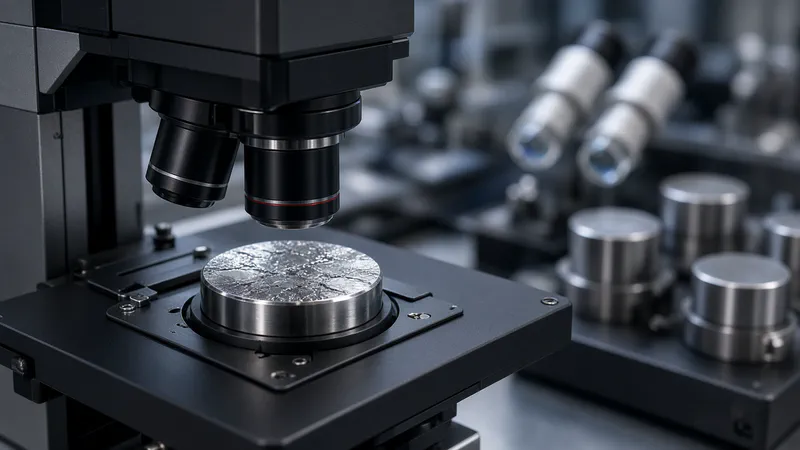
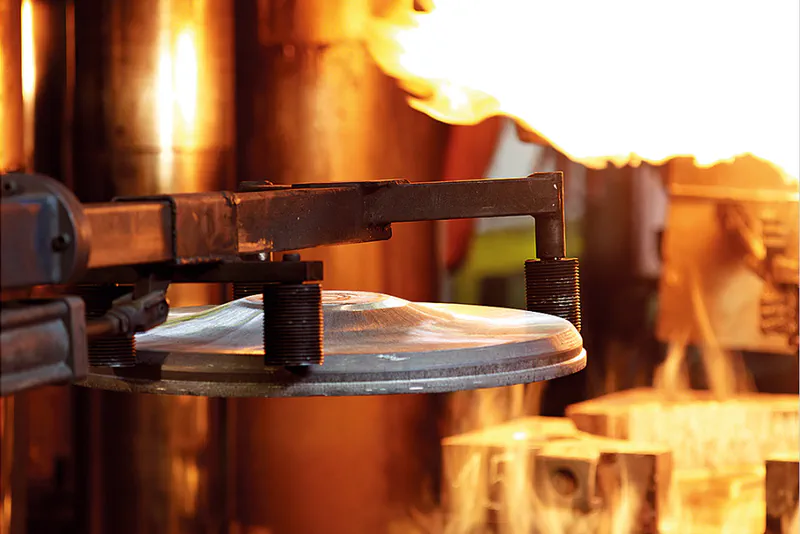
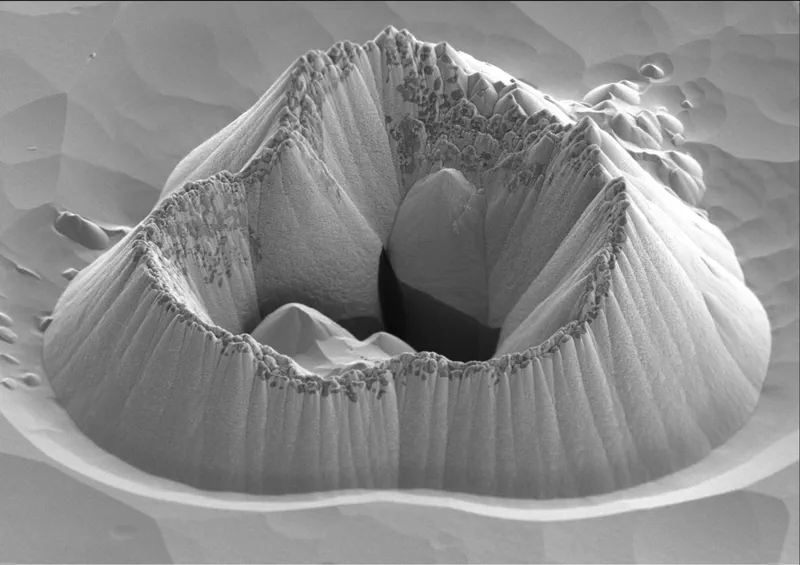
The same applies to process chains. A label such as “heat treated at 900 °C for 2 h” does not describe the resulting material state. EMI represents a process chain as a sequence of material state transformations, each linked to measured or simulated histories such as temperature, strain or force over time. Metallography is a good example: a micrograph becomes a networked engineering object linked to material, specimen, process history, test results and ICME simulations. We presented this approach at the Metallography Conference in Leoben.
Core use cases
- Material master management: one governed material identity across engineering, procurement and quality, synchronized with PLM, ERP, CAD and CAE.
- Materials qualification and LIMS: sampling and test orders, specimens, raw results and approvals with traceability from evidence to released values.
- Material development and ICME: experimental data combined with simulations, for example from JMatPro®, and predicted versus measured behavior.
- Materials data for CAE and simulation: solver-ready material models derived from approved source data, for example for Abaqus or LS-DYNA, with traceability back to the evidence.
- Substance compliance and sustainability: composition and route-specific process data connected to BOMs for CPF, PCF, LCA and digital product passports.
- Reference data and materials selection: sources such as MMPDS, ESDU MMDH, NCAMP/CMH-17, StahlDat and Copper Key in one context with internal materials (databases).
- Cross-enterprise data exchange: sampling requirements and test results exchanged as standardized VDA 231-301 payloads over REST, files, queues or data spaces.
Openness has several dimensions
For an EMI platform, architecture determines whether materials knowledge remains usable over decades. An API alone does not make a system open. Data, schema, computation, integration, deployment, scalability and exit strategy have to be assessed separately. The key question is: if the application disappears, do data, semantics and attachments remain intelligible and reusable?
VDA 231-301 shows why meaning and transport belong in separate layers. The standard defines a JSON schema for material sampling and test information along the supply chain, regardless of whether it travels via REST, files, queues or data spaces. The schema is openly maintained on GitHub.
How Matplus EDA implements EMI
Matplus EDA® follows these principles:
- Data is stored in JSON rather than proprietary formats. EDA uses open source components and Docker-based microservices and runs on premises or in the cloud.
- Python is the extension language. Scientific Python libraries operate directly on governed materials data for multidimensional curve fitting, parameter identification and statistics.
- Aggregation tables create analysis-oriented views for OLAP, dashboards and AI without forcing the knowledge model into a rigid reporting schema. ECharts provides interactive engineering graphics in the workflow, Superset provides configurable dashboards.
- Operational data (MongoDB) and analytical workloads (ClickHouse) are separated, so that each can scale horizontally.
- VDA 231-301 import and export closes the loop between test orders, test results and material cards.
EDA originated in the exploratory analysis of JMatPro parameter studies. Today its architecture is intended for engineering data at its natural scale: raw laboratory signals, images, test series, process histories and simulation campaigns, not just selected scalar values.
Open at rest. Open in processing. Open for analysis. Open in exchange.
Talk to us
Would you like to see how Enterprise Materials Integration can work with your existing PLM, ERP and CAE landscape? We will be happy to show you Matplus EDA in a demo.
Request a demo